Flagstaff as a music community
Feature story written for my senior journalism capstone project, published on Dec. 12, 2025.
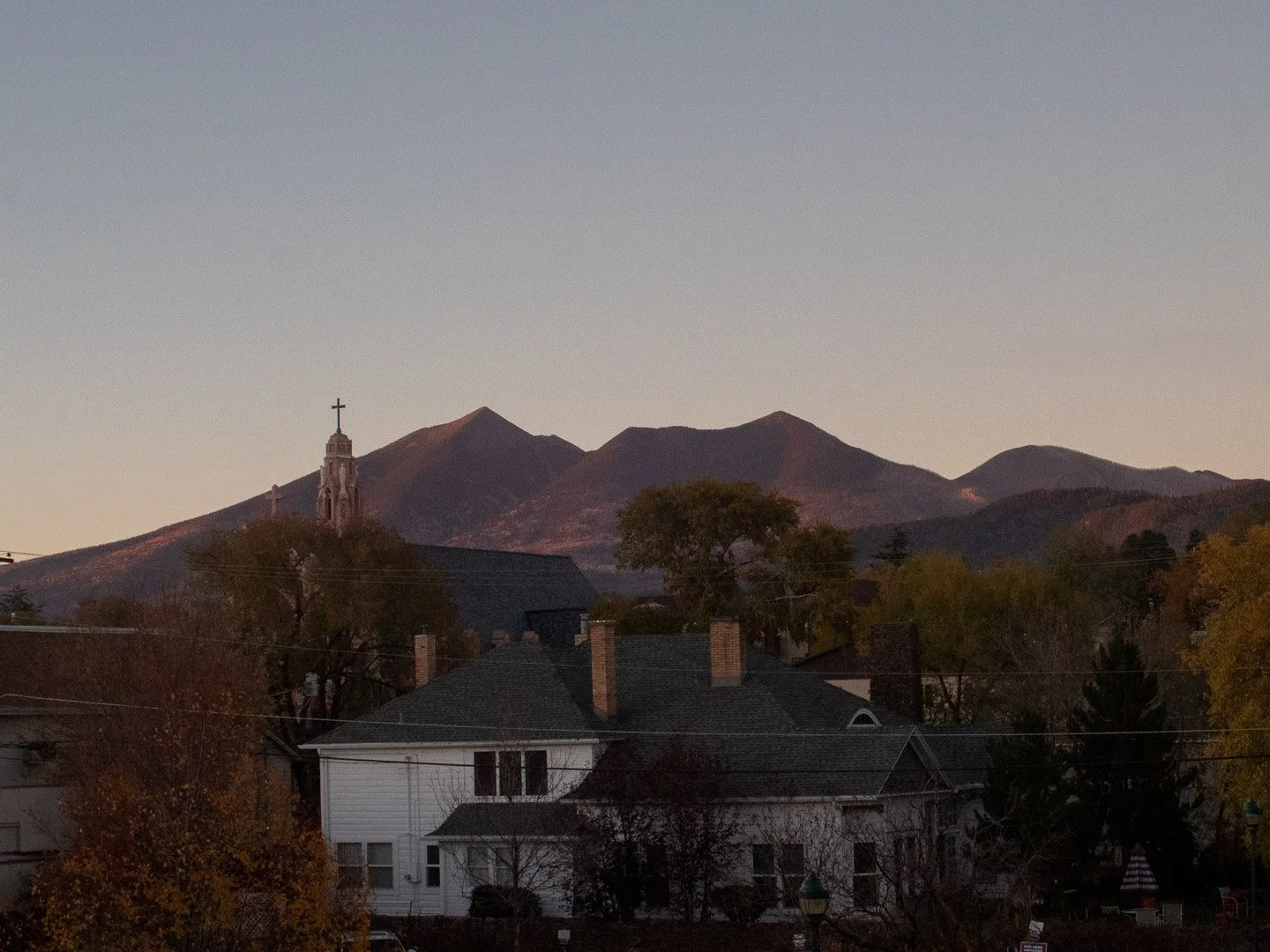
Driving around in Flagstaff, I find it hard to take my eyes off of the San Francisco Peaks. The natural beauty and sheer size of the mountain encourage the possibility of heaven combining with earth.
As I made my way into adulthood as a college student, the mountain acted as a source of grounding for me. It brought me back to reality and served as a reminder that I was in one of the most beautiful places on earth.
With the town’s deep roots with the local Indigenous populations, I also learned that many other people feel the same. Others also look to the mountain as a spiritual and physical source of peace and life.
The San Francisco Peaks, Nuva’tukya’ovi (Hopi) or Dookʼoʼoosłííd (Dine), reaches 12,633 feet at its tallest point. One translation of the Dine name describes it as “the summit that never melts,” after the commonly snowy peaks, representing the force of life that exists with it.
On top of the mountain sits Arizona Snowbowl, a ski resort that has been a source of controversy since its formation in 1938. The commercialization of such a sacred place has pushed ethical boundaries, causing many to question the importance of “outdoor recreation.” The amount of trash after a busy day alone proves how pollutive the operation can be.
In my own research of the topic, I have seen nothing but perseverance from the Indigenous groups who have been active in advocating for land rights for close to a century. This shaped the peaks in another light for me, representing perseverance through stillness.
Dineh Redstar Tohe, culturally rooted to the eastern agency of the Navajo nation, has been a Flagstaff resident on and off since 1994. Through his experiences, he sees the mountain fueling the Indigenous groups around him, saying “that mountain keeps us all going.”
“We are still a strong community, still practicing our culture and teachings and keeping that alive,” Tohe said. “Using music is a great way to do that, because it exposes everyone to different stories and different styles of playing. That’s definitely a huge thing for us as native folks who live in this town.”
In 2014, the City of Flagstaff approved a 20-year-deal to sell Arizona Snowbowl reclaimed sewage water for artificial snowmaking. This occurred after years of protests and lawsuits from Indigenous people, who were ultimately ignored.
However, perseverance will always shine through, in all the forms it can.
After this deal was signed, Ed Kabotie, local activist and musician, created a benefit concert to continue bringing awareness to the issue. The event is called “Rumble on the Mountain” and has continued every year since.
With Flagstaff bringing together Indigenous communities, college students, travelers, families and so many more, a unique small-town culture is created. Tohe said some ideas are universal within the reservation, and messages can have little effect. But the cultural overlap of Flagstaff can be a great way for people to connect with different people and ideas, allowing for positive perspective sharing.
Tohe said he would like to one day bring his own individual Indigenous perspective to the surface through the Flagstaff music scene. By using things like authentic drum styles, traditional storytelling techniques or intentional prayers, he said he believes he can bring important Indigenous issues regarding the land and people to the general public.
“With this very diverse community that we live in, in Flagstaff, I think that message could go a long way for a lot of people,” Tohe said. “Just offer a different way of hearing, and taking in the music and what it actually means, versus just listening and being a part of the crowd.”
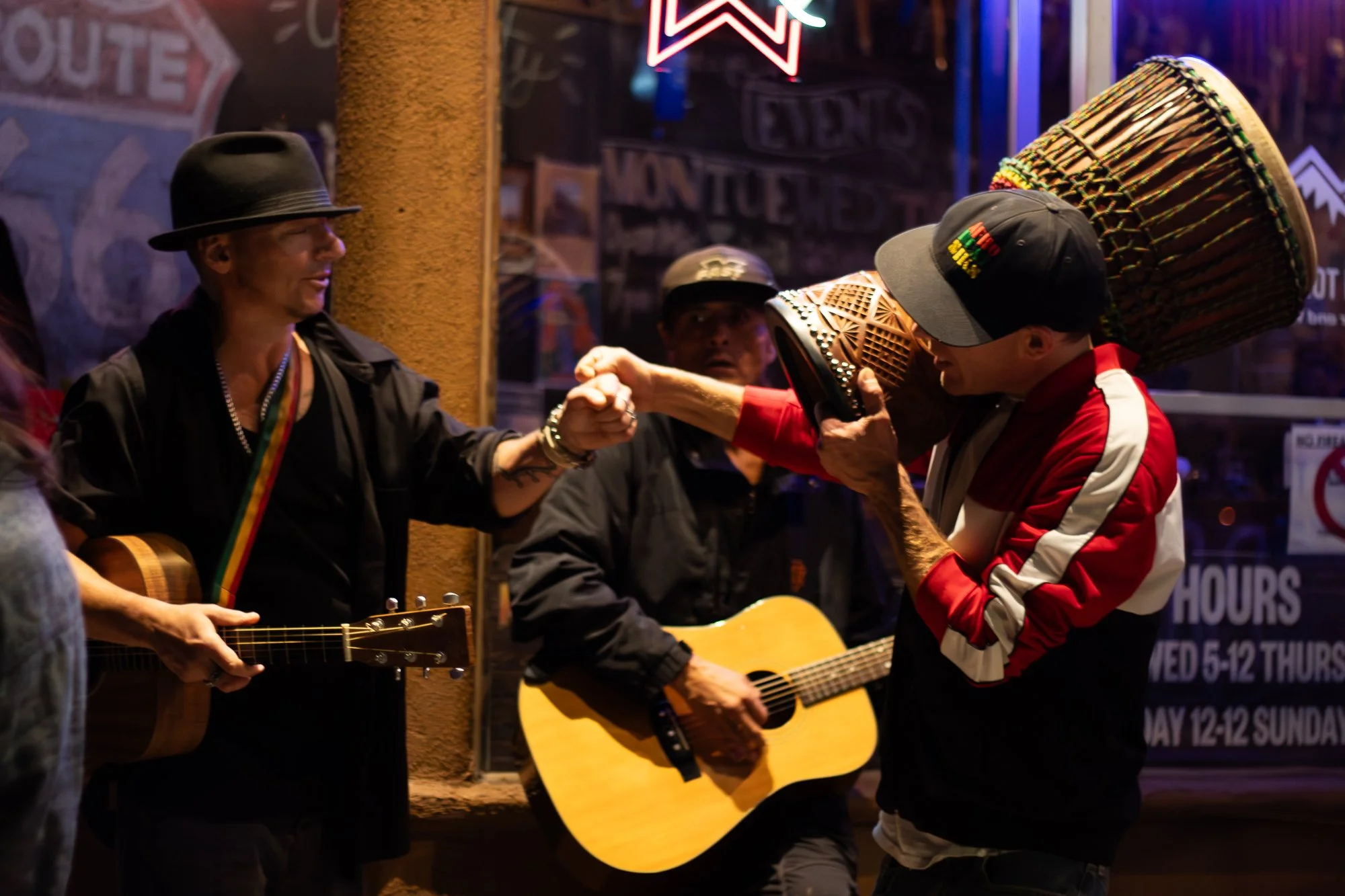
Sierra Bryan is an independent musician from Austin, Texas who passed through Flagstaff for college beginning in August of 2018. The Flagstaff music scene was a place for Bryan to explore the world on her own. She said things like Rumble on the Mountain and Indigenous punk rock band Sihasin showed her the importance of issues outside of her, while the worship and songwriting community helped her find the importance of being her authentic self.
“Music does something in that way where it just takes away your loneliness, even for a split second,” Bryan said. “Whether it’s through relating to a song or even just going to a show and being around people.”
Bryan said she first found the power of music within a religious context, where she was able to use worship music and songwriting as a tool for individual exploration. When she saw the way people connected through the creative and spiritual display of raw emotion, she felt God.
But Bryan did not feel the power dissipate as she shifted her individual spirituality. She said the same feeling of holiness came from watching friends, or even strangers, perform on stage beautifully and authentically.
“That’s what I love about going to shows and going to concerts and going to clubs or going to dance parties,” Bryan said. “[It’s] for you to express, and expressing with other people is just, for lack of a better word, magic.”
In addition to participating in live music and the worship community, Bryan was also playing in a band during her time in Flagstaff. Her band “Glazed Jeans” was active locally and participated in open mics and KJACK’s Battle of the Bands at the Orpheum in 2019.
One of the band’s first big performances was an actual competition, however Bryan said she never saw the music scene as that. Her time in Flagstaff provided her many opportunities, resources and friendships that have gotten her to where she is today.
Friends of Bryan have helped her with recording and releasing music, booking tours, photography, videography, graphic design and so much more. Although she is an independent musician, she said the amount of work that goes into it creates a network that can spread any distance.
“It’s nice to try hard and do what I’m doing and then see people respond to that in a positive way, whether that’s through listening, helping, just coming to a show,” Bryan said. “It feels really gratifying to know that I am supported by anybody, but also by people who are doing the same thing that I’m doing.”
The COVID-19 pandemic and the historical events of 2020 hit humanity in a hard way. Growing up and learning to be independent during that time was an extra challenge that taught many, including Bryan, the importance of strengthening the community around you.
As pandemic restrictions were lightening up in 2021, Bryan and her friends found themselves going to Mountain Top Tap Room on Mondays, one of the slower nights of the week. It was here that Ariel Smith, Bryan’s friend and guitar player, saw an opportunity for their friend group made up of talented songwriters and musicians.
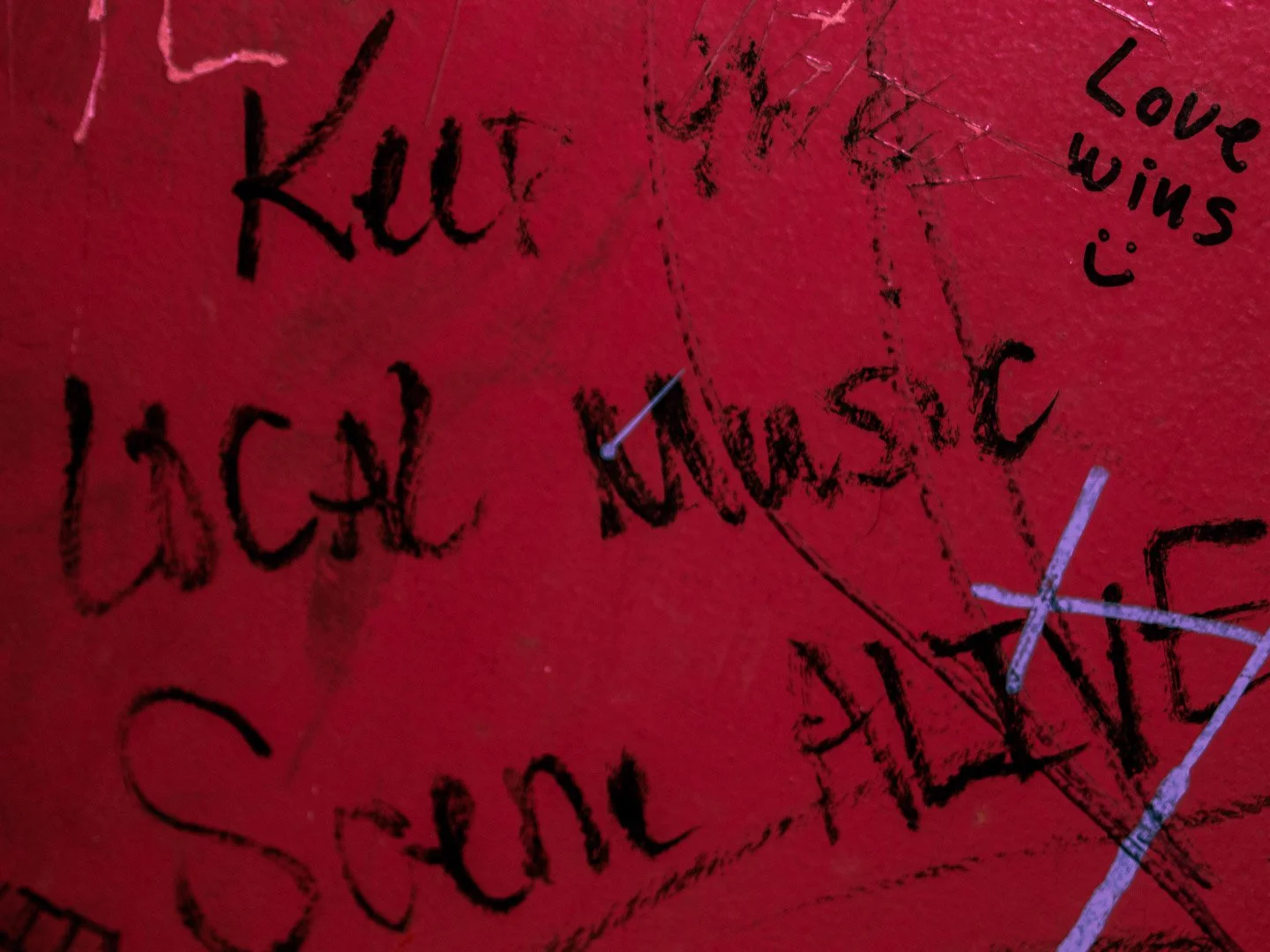
Bryan said there were few places in town at the time for softer, folk-type music and so Smith came to the owner of Mountain Top with an idea. His experience with audio engineering in combination with the bar owner’s support for the community, Mountain Top Open Mic Mondays were born.
Every Monday for the past four years Mountain Top has opened their doors to performers, creating a sanctuary for musicians and music lovers alike. Each week hosts a full sign-up sheet featuring a variety of 15-minute sets from 7 p.m. until close at midnight.
One moment you could be listening to someone singing a bluegrass song with a stand-up bass, mandolin and violin; and the next you could be listening to a full rock band cover “Whipping Post” by the Allman Brothers Band. Bryan said the whiplash between performances provides an expansive music listening experience, inviting appreciation for genres not previously considered.
Bryan also watched as people got more comfortable with their stage presence and challenged themselves to write more songs, which inspired her to do the same.
Seth Bowles has been working at Mountain Top as a bartender for nearly four years and has watched Mondays remain a constant hit.
Bowles said the open mics create a welcoming and inviting atmosphere that encourages involvement from musicians and crowd members alike.
“It’s for everybody,” Bowles said. “All styles of music, all skill levels. People can hop up there and sing a song if they want [or] others can get up there and take it a little bit more seriously, it’s fun.”
On a Monday night, Bowles said one thing he sees from everyone is a smiling face; whether it’s from a local, a college student or even a traveler who wandered in from off the street.
I was at Mountain Top one night working on a story for class and I interviewed two sisters who were traveling across the country in their Volkswagen. Of all the towns they went to, they said Flagstaff was their favorite. They credited the bar with being an example of what drew them in, a social community with members who are willing to connect and reciprocate energy.
The open mic nights have defied inflation providing a five dollar pint deal since 2021, keeping customers happy and tabs cheap.
“The discount is nice, but the vibes are the best,” Bowles said. “It’s community building … Some people, that’s what they look forward to every week.”
The stage invites anyone to come up and play. Both Bryan and Bowles have watched people perform for the first time or build their confidence through consistent performances, both of which have led to bands forming and playing more in the local music scene.
Bands like West Thumb and Snow Day have passed through on Mondays as they work on solidifying their skills. The 15 minute sets have given way to both of these bands playing two hour sets at places like Mountain Top or other venues in town.
Monday night open mics have been a hit at Mountain Top since its conception. Bowles said he doesn’t see that slowing down anytime soon because of the welcoming environment that has been curated over the years.